.svg)




In February 2025, I exited Schbang and sold my stake in the company I had spent a decade building. The very next day I founded The Cofoundry, and the first question almost everyone asked me was the same one. So, another agency?
The honest answer was no, because after fifteen years inside the agency world, from my first marketing agency job to founding and running one of India's largest independent agencies, I did not want to build a version of something I had already built once. What I wanted instead was a different kind of partner for the people I had spent my whole career around. I shared a short version of this story in a video, and this is the fuller one, the why behind that decision, and the why behind The Cofoundry.
India's advertising industry is not short on ability. It grew 6.3% and is set to cross ₹1.15 lakh crore by 2026, with digital now close to 60% of all spend. There is more talent, more tooling, and more ambition in this market than at any point in my career. AI has only widened that gap between what is possible and what actually gets built, compressing work that used to take a team a week into an afternoon.
And yet the relationship at the centre of it all, the one between a brand and its agency, is quietly broken.
Thousands of independent agencies are fighting uphill against global holding networks. Brands are cycling through partners every six to twelve months and wondering why nothing compounds. The pieces are all there, and what is missing is the one thing that actually turns effort into growth, which is alignment. That gap is what I kept circling back to, and it is the reason The Cofoundry exists.
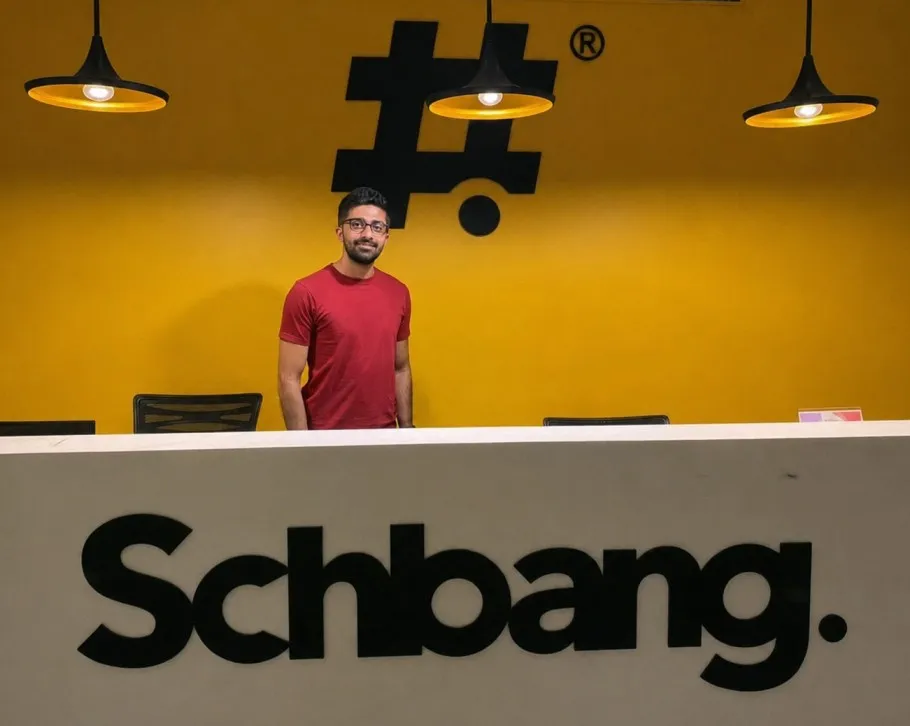
I left Schbang because I had learned what I came there to learn, it was my on-the-job MBA. Ten years of scaling a bootstrapped startup into a 1,200+ person agency taught me exactly what scale costs, and where brands and independent agencies quietly break. I wanted to spend my next chapter working on that problem, not running another people shop.
My story did not start in advertising. In 2010, I left a finance job to bet on digital marketing, at a time when most people in India did not care about Facebook or Twitter yet. That single decision, betting on a shift before it was obvious, shaped everything that followed.
By 23, I was heading North India operations for the agency I had joined, one of the youngest business heads in the market. When I set up the Gurgaon office, we pitched and won thirteen retainer brands in the first year. That was the moment I learned that betting early and building fast beats waiting for permission.
In 2015, I co-founded Schbang, and over the next ten years we grew it from nothing into a 1,200+ person team working with 300+ brands, across India, the UK and the Netherlands, partnering with names like Godrej, L'Oréal, Castrol, Britannia and Pidilite along the way. It became one of India's most respected independent agencies, with recognition from the Financial Times, Brand Equity and many others.
I remember renting our first 10,000 square foot office with only twenty people in it, which felt reckless at the time. That stress is what forced us to grow into the space faster than we thought we could, and it taught me that scale is rarely comfortable while it is happening.
Those years taught me what scale actually demands, and what it costs. For that whole decade at Schbang I sat on the agency side, working with more than 300 brands. After I left, I moved to the other chair completely, consulting on the brand side at one of India's largest financial services companies.
There I built a team of fifteen, owned the go-to-market for its key launches, and we shipped more than 4,000 creatives and won the company multiple marketing awards along the way. For the first time I was the one hiring and managing agency work, seeing the same problems from the opposite end of the table. That view is what made the next decision clear.
The Indian marketing ecosystem does not have a partnership problem. It has an ego problem. Brands treat agencies as vendors, and agencies chase revenue and survival with too little focus on the outcome. Each side protects its own margin, and the mission both of them signed up for quietly gets lost in the middle.
I have watched this from both chairs now, and the pattern is hard to unsee. When a brand treats its agency as a cost to be squeezed, it gets exactly the transactional work it is paying for. When an agency treats a brand as a logo to be retained, it optimises for the renewal, not the result.
Neither side is acting in bad faith, they are just protecting different things.
This misalignment does quiet damage, killing trust first, then creativity, and over time the mutual growth that both sides actually wanted. You can see it inside the teams too. Most breakdowns I have watched were not about bad intent, they were about unclear ownership, nobody agreeing early enough on who owns what. Brands want control, agencies want trust, and the hard conversation about accountability keeps getting postponed until something slips.
The consequence is that growth stalls for both because growth compounds only when both sides co-own the outcome, and a system built for transactions instead of transformation will keep rewarding the same legacy networks while independents fight an uphill battle. That is not a talent gap but a structural one, and structure is something you can actually fix.

The Cofoundry is a founder-led growth ecosystem, and in plainer language, a marketing operating system for how brands and independent agencies work together. It is not a consultancy that advises from a safe distance. We embed, we co-build, and we act like a co-founder with real skin in the game, minus the equity.
The name is the idea, because most founders I meet do not have a knowledge problem, they have a structure problem. They know what needs to happen, they just cannot get out of the way long enough to make it happen. What they are looking for is not a mentor who has been there and will tell you about it, and not a consultant who hands over a deck and leaves. They want someone who builds alongside them and cares about the result.
That is a co-founder. But without giving up equity to get one.
The difference is in how we work. A consultant diagnoses from the outside and moves on. We embed, we co-build, and we bring real operator experience into the room, because I have already made most of these mistakes myself, and I would rather you learn from them than pay the full price of making them again. The work is not a deck, it is sitting inside the actual decisions, on positioning, on hiring, on the go-to-market call that everyone is avoiding.
So The Cofoundry works on both sides of that broken relationship. For independent agencies, we redesign the growth engine so it stops depending on the founder for everything. For ambitious brands, we build the go-to-market spine and connect them to vetted, Cofoundry-approved partners they can actually trust. When the right brand and the right agency finally operate from the same system, both of them scale, rather than scaling at each other's expense.
Most brands do not struggle because marketing is hard. They struggle because their marketing was never built to scale. There are campaigns, there is content, there are agencies, but the pieces do not talk to each other. The Cofoundry helps brands build the operating system underneath all of it, so go-to-market stops being a one-time event.
The brands that truly scaled, in my experience, had one thing in common. Marketing for them was not a department that produced assets, it was a growth system with a spine.
That spine starts earlier than most founders think. Before a single rupee goes into ads, the real work is customer design, understanding who your first hundred customers actually are, where they come from, and why they buy. Your first hundred customers are not a volume target. They are the clarity your entire go-to-market is built on.
At The Cofoundry, we help brands install that system, align the GTM, build internal capability, and apply a real methodology instead of chasing campaigns that win awards but not customers.
Most independent agencies hit the same wall. Great talent, good clients, strong culture, and still, flat growth. The reason is almost always the same. The agency is built around the founder instead of beyond them. Scaling an independent agency means building systems that run without you, not working harder inside them.
Here is the difference I have watched play out again and again. A ₹1 crore agency runs on the founder. A ₹10 crore agency runs because of its systems. At one crore, the founder is the engine. At ten crore, the founder has built the engine and stepped out of the driver's seat.
The smaller one sells execution, reels and statics and campaigns. The bigger one sells outcomes, growth and category leadership.
I have watched hundreds of independent agencies stay stuck, and it usually is not a talent problem. It is isolation. When every decision, every escalation and every blind spot sits on one founder's brain, that founder becomes the ceiling. It shows up in retention too, where the best people leave every six to eight months, not for money but because nobody mapped their growth to the founder's vision.
That shift does not come from more hustle. It comes from architecture, from sharper positioning, productised services, leadership layers, and a culture that does not need the founder in every room. That is exactly the work we do at The Cofoundry, helping independent agency founders redesign the growth engine so it scales by design. And for the founder who is carrying it all alone, the point of The Cofoundry is to be the co-founder in everything but the equity.
When I stepped away from Schbang, I said publicly that I did not want to start another agency, and I meant it. The ecosystem does not need one more agency competing for the same accounts. It needs a layer that makes the whole thing work better.
So The Cofoundry is not another network, and not another consultancy. It is a set of convictions I earned the expensive way, turned into a way of working:
None of that is theory, it is what I learned building one company for a decade, and it is what I now build with others, on both sides of the table.
There is a personal reason too, and when I left, the question I kept asking myself was where I could derive the most meaning from the years ahead. Teaching came naturally to me long before it was intentional, and I have spent time in front of a few thousand students and now mentor early-stage founders as an angel investor. Outside work, wildlife photography keeps me honest, and it became Into The Wild, a small venture of its own. Both come from the same instinct, which is to slow down and understand something before acting on it. The Cofoundry is that instinct applied to how brands and agencies grow.
When the right brands and the right agencies finally work from the same system, something changes. Everyone scales together. That is the ecosystem we are building at The Cofoundry, and we are just getting started.
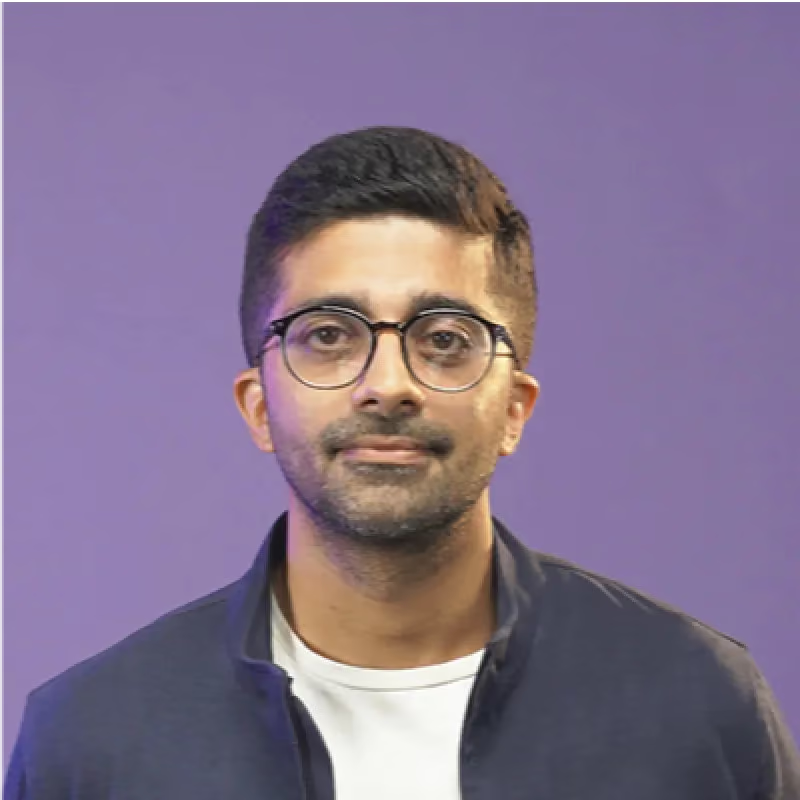
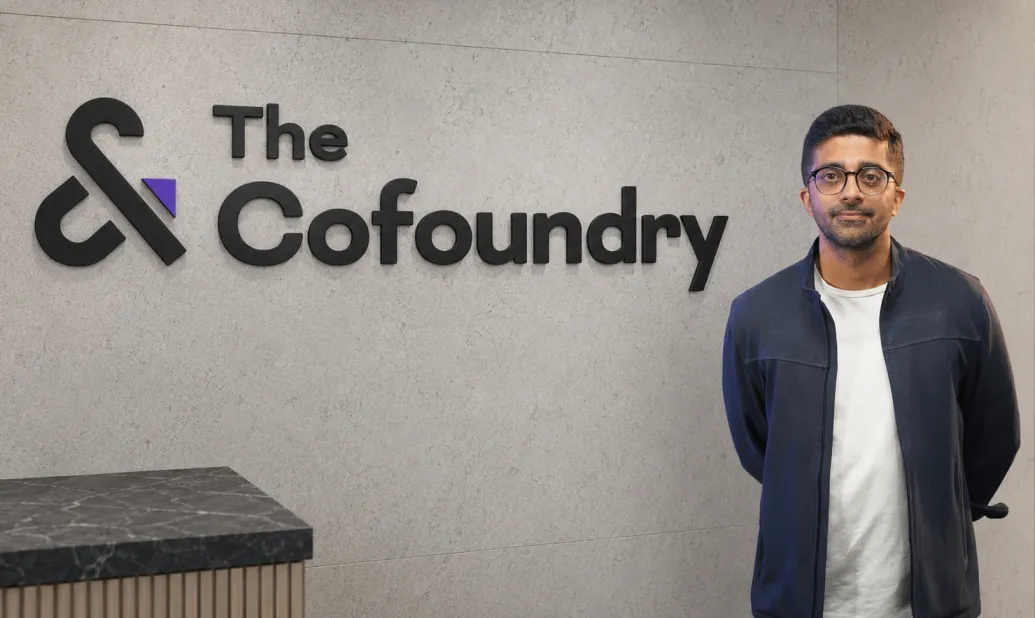
The Cofoundry is a founder-led growth ecosystem for independent agencies and ambitious brands, founded by Akshay Gurnani after he exited Schbang in 2025. It works like a strategic co-founder, embedding with founders to build the systems, positioning and go-to-market structure they need to scale, without taking equity.
Akshay co-founded Schbang in 2015 and spent ten years scaling it into a 1,200-plus person independent agency. In February 2025 he exited and sold his entire stake. He did not want to build another agency. He wanted to fix the structural gap he had seen between brands and agencies from both sides of the table.
A consultancy advises from the outside and a traditional agency executes campaigns, but The Cofoundry does neither. It embeds like a co-founder with skin in the game, co-building the operating systems that brands and agencies use to grow, and connecting brands to vetted execution partners rather than competing with them.
For brands, The Cofoundry builds marketing as a growth system rather than a department. That means aligning the go-to-market strategy, building internal marketing capability, installing the rhythms that make growth repeatable, and connecting the brand to trusted, Cofoundry-approved execution partners.
For independent agencies, The Cofoundry redesigns the growth engine so the business scales beyond the founder. That covers positioning, productising services, building leadership layers and culture, and installing the operating structure that lets an agency sell outcomes instead of execution.


.svg)

.svg)


