.svg)




Most brands we meet are not short on effort. They are running campaigns, posting content, paying two or three agencies, and still watching growth arrive in spikes that never quite compound.
The problem is rarely the work, it is that nobody owns the system underneath the work. Each agency optimises its slice, each channel runs on its own logic, and the brand is left holding a pile of activity that never adds up to momentum.
That is the gap The Cofoundry was built to close. We are not another agency competing for the account, and not a consultant handing over a deck. We build the marketing operating system a brand needs to scale, and we do it from the inside, like a co-founder with skin in the game.
The Cofoundry is a growth ecosystem built for two sides at once: independent agencies and ambitious brands. Our founder, Akshay Gurnani, built it after fifteen years watching those two sides fail each other, with brands treating agencies as vendors and agencies chasing survival, while the outcome both wanted slipped through the middle.
Brands are not passive clients in this ecosystem. They are one half of the engine.
A brand brings the ambition, the product and the ownership of its own growth. The Cofoundry brings the system that makes that growth repeatable, plus access to a network of vetted, Cofoundry-approved agencies that have been pressure-tested to actually deliver. Instead of a brand hunting for partners in the dark and hoping the relationship holds, it plugs into a structure where everyone is aligned to the same result.
This solves a problem most brands underestimate, which is the cost of choosing partners badly. A wrong agency hire burns six months and a budget before anyone admits it is not working. By vouching for the agencies inside the ecosystem, The Cofoundry takes that risk off the table, so a brand spends its energy on growth rather than on auditioning vendors.
That alignment is the whole point. When a brand and its partners finally co-own the outcome rather than protect their own margins, growth stops being a tug of war and starts to compound.
Most brands do not have a marketing problem. They have a structure problem, and it shows up in a few predictable ways.
Marketing gets treated as a department that ships assets, not a system that owns growth. There is no single owner of demand once a campaign ends. Agencies and freelancers do not talk to each other, so the story fractures across channels. And the founder becomes the connective tissue by default, holding it all together personally until their attention moves and everything stalls.
We see the same story on repeat. A brand hits early traction, hires one agency for performance, another for content, a freelancer for design, and for a while it works. Then growth flattens, and the performance agency blames the creative, the creative team blames the brief, and the founder ends up refereeing, because they are the only one who can see the whole picture. Nobody in that room is wrong, and nothing gets better, because the fault is not in any one partner. It is in the absence of a system holding them together.
The market has made this more punishing. For a decade, brands could paper over weak structure with cheap paid acquisition, but that era is over. As acquisition costs climb, the brands that keep growing profitably are the ones where marketing is system-driven rather than budget-driven, and when media stops being cheap, structure is the only thing left that compounds.
This is exactly the point where a brand needs a system, and usually the point where it has no idea how to build one.
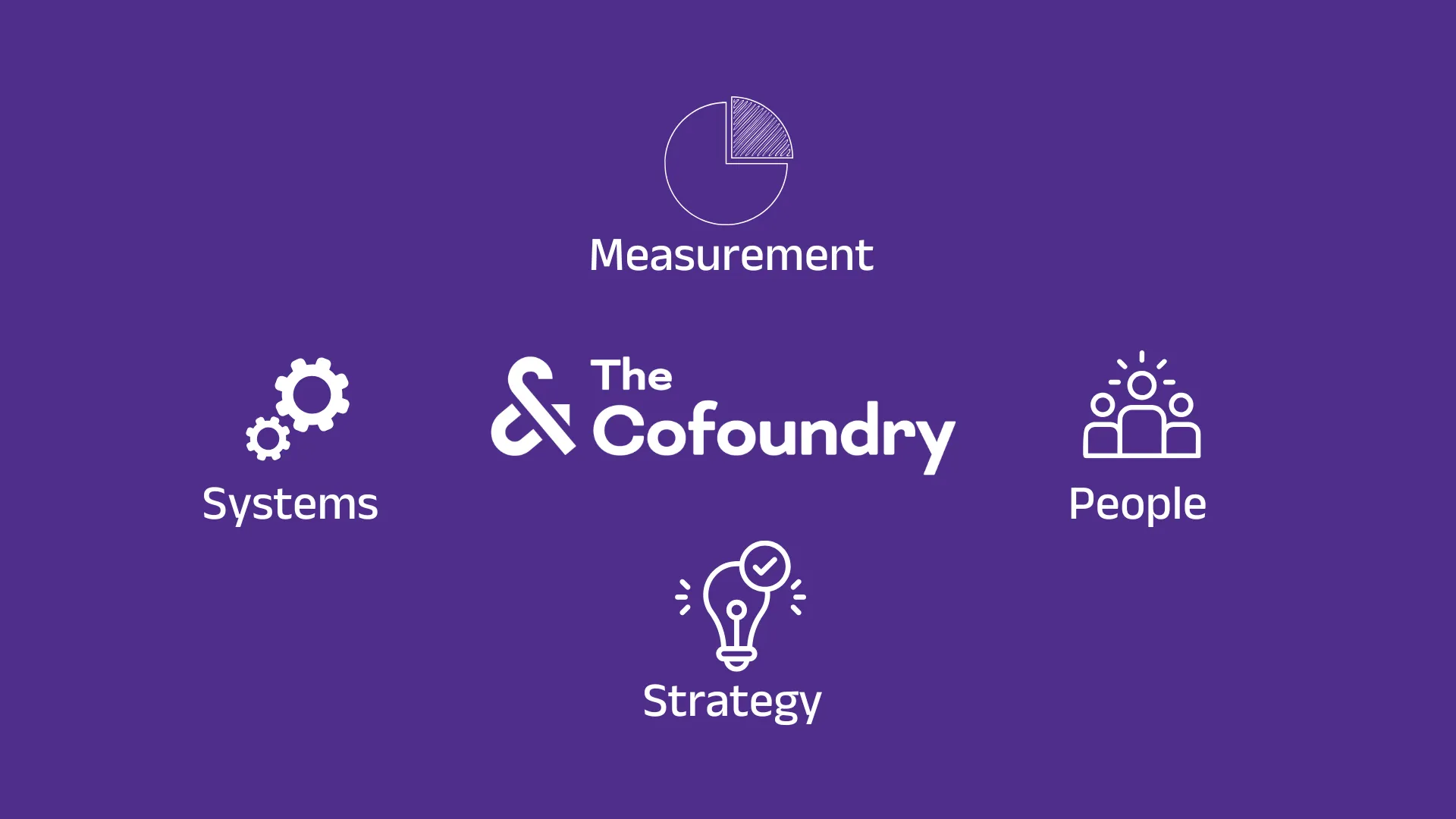
The work never begins with tactics, it begins with a diagnosis. Before we build anything, we sit down with the founder and the marketing leads to understand how the brand actually runs today, where its growth is leaking, and which parts of the system are missing rather than simply broken. Only once the full picture is clear do we start designing the marketing operating system that turns scattered activity into a structure that compounds. That build tends to span six areas, and while some brands need all of them and others come to us for just one or two, we always begin where the diagnosis points.

Most people advising brands have only ever seen the problem from one side. The Cofoundry was built from both.
Akshay spent a decade co-founding and scaling Schbang into a 1,200-plus person agency that worked with more than 300 brands, including names like Godrej, L'Oréal and Britannia. That is the agency side, the view of how marketing actually gets made and where it breaks. Then he did something most agency founders never do. He crossed the table.
For a year after leaving Schbang, he ran marketing on the brand side, inside India's largest financial services company, hiring and managing agencies rather than being one.
That combination is rare, and it is the reason the advice lands differently. The Cofoundry understands what a brand needs because it has sat in the brand's chair, felt the frustration of managing partners who were not aligned, and delivered results from that seat. It also knows exactly how agencies think, so it can build the bridge between the two instead of taking sides.
This is not theory for us. Having run marketing from the brand side, we know how a brand actually evaluates a partner, what a marketing head worries about heading into a review, and how quickly trust erodes when the numbers do not show up. We build for that reality because we lived it recently, not a decade ago, and that is what a brand is really buying when it works with us: judgment earned on both sides of the table.
You can see the philosophy in how the brands we admire actually grow. Consider how Zerodha built India's largest brokerage on a marketing budget of almost nothing. There was no campaign calendar carrying the business. There was a system: education through Varsity, radical transparency, a product that referred itself, with more than 60% of clients arriving through existing ones. Zerodha did not out-spend anyone, it out-structured them. That is the kind of system we help brands design. The specifics look different for every brand, but the principle holds: a structure that keeps working after the campaign ends is worth more than any single campaign that spikes and fades. Building that structure, and knowing from experience which parts of it actually move the needle, is the work we take off a founder's plate.
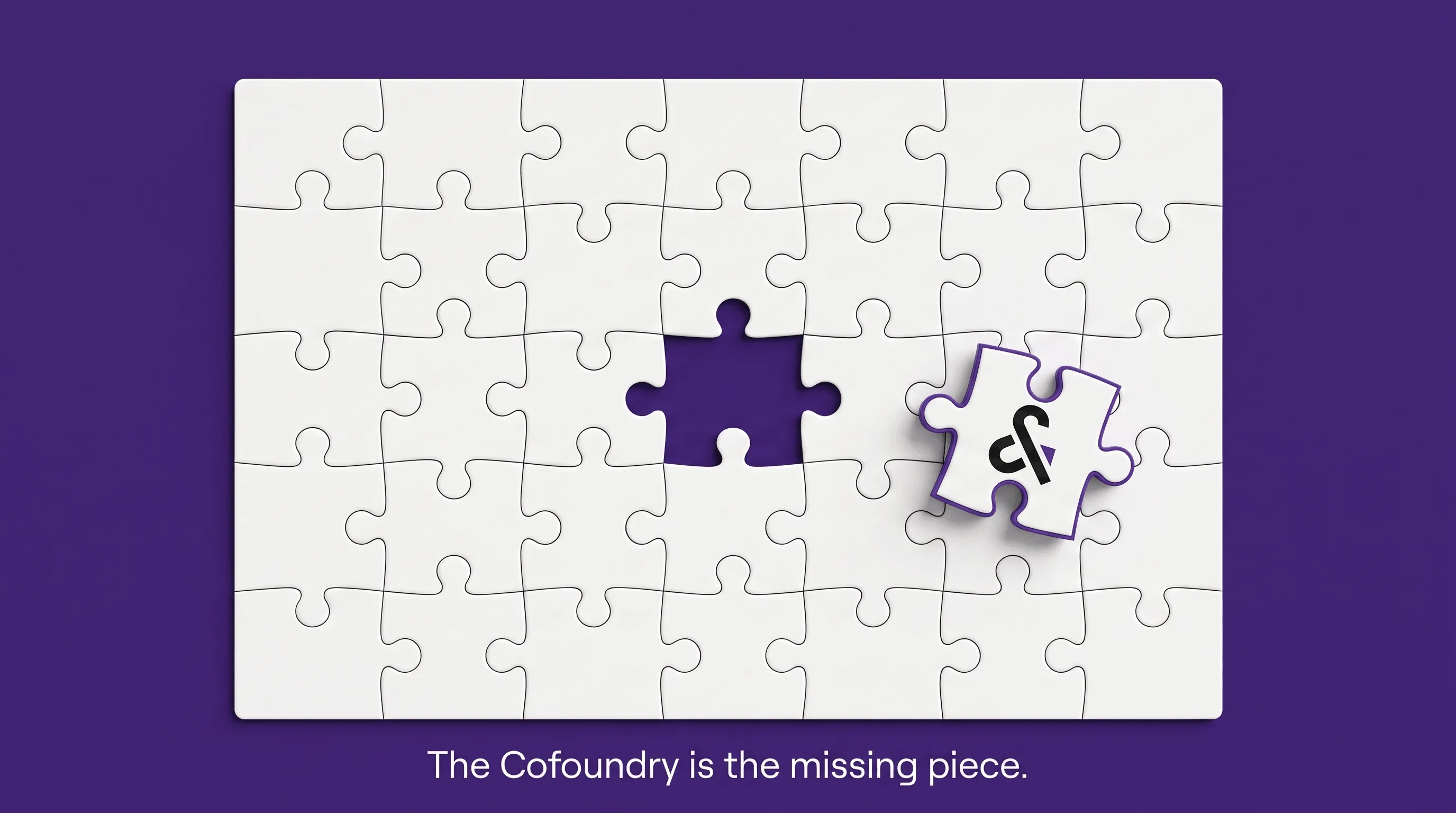
The difference between The Cofoundry and everyone else advising brands is proximity. A consultant diagnoses from the outside and moves on. A co-founder gets inside the business and builds with you, and stays accountable for whether it works.
That is the model. We embed with your team, co-build the system alongside you, and bring real operator experience into the room rather than a set of recommendations. In practice that means we are in the decisions that matter, on the GTM call, in the hiring plan, on the review of what is and is not working, not parachuting in for a quarterly presentation. We care about the outcome because we are close enough to it to be measured on it, and we do all of this without taking a rupee of equity.
It is, put simply, a co-founder in everything but the equity.
You are probably ready for this kind of partner when a few things are true at once:
None of those are failures. They are simply the signs that your marketing has outgrown its structure, and that it is time to build the system that comes next.
This is the ecosystem Akshay set out to build. Not a place where brands and agencies simply coexist, but one where they compound each other's growth, with the brand owning the ambition and The Cofoundry owning the system that carries it.
The brands that will still be scaling in five years are not the ones running the cleverest campaigns. They are the ones who built the architecture underneath them on purpose, with a partner who had done it from both sides before. That is the work, and that is where The Cofoundry comes in.
The Cofoundry builds the marketing operating system a brand needs to scale. That covers mapping the go-to-market strategy, assembling the in-house marketing team, sharpening the brand story, scaling founder branding, cementing repeatable growth processes, and tying every marketing rupee to measurable ROI. It works like a co-founder embedded with the brand, without taking equity.
The Cofoundry does not replace a brand's agencies. It builds the system those agencies plug into, giving demand a clear owner and aligning every partner to the same outcome. Where a brand needs stronger execution, it connects them to vetted, Cofoundry-approved agencies rather than competing for the work itself.
A consultant advises from the outside and hands over recommendations. The Cofoundry embeds like a co-founder, co-builds the system alongside the brand's team, and stays accountable for the result, all without taking equity. The difference is proximity and ownership rather than detached advice.
Founder Akshay Gurnani spent a decade building Schbang into a 1,200-plus person agency working with more than 300 brands, then spent a year running marketing on the brand side inside India's largest financial services company. That combination of agency and brand experience is what shapes how The Cofoundry works with brands.
The Cofoundry works with ambitious brands whose marketing feels busy but is not compounding, who are juggling multiple unaligned partners, or whose growth still depends entirely on the founder. It is built for brands ready to move from scattered campaigns to a marketing operating system that scales.


.svg)

.svg)
.svg)


