.svg)




Launch. Spike. Panic. Reset.
Most teams know this cycle by heart, even if they never say it out loud.
The product goes live, traffic arrives, and a few good weeks follow before the curve flattens and the team scrambles to diagnose what went wrong. By the time anyone agrees on a strategy to revive the campaign, the window for early momentum has already closed. Then they reset, plan a new push, and start the charade again.
This is the GTM strategy that most companies are actually running, not the version that lives in the deck.
The frustrating part is that the launch was probably fine. The creative was sharp, the channels were right, and the spike was real. The problem was not the launch itself; the problem was that the plan ended there.
Research from Startup Genome analysing thousands of early-stage companies found that 80% of startup failures trace back to GTM and business model problems rather than product problems, which means the product is typically working fine while the system built around it quietly fails.
The go-to-market plan treats launch as the destination, and that framing is exactly where the problem begins.
Launch is the starting line, not the finish.
But most teams still treat post-launch momentum like an afterthought rather than something intentionally designed.
Demand generation stops being anyone's job the moment the launch wraps.
The team that built the launch deck moves onto the next brief, the spike becomes the benchmark, and when the benchmark isn't hit again, the diagnosis defaults to "the market has moved" rather than "the architecture was never designed to sustain momentum beyond the initial push."
Harvard Business School research puts a specific number to this: 90% of organisations fail to execute their strategies successfully, and not because the strategies are wrong, but because execution assumes a system that was never actually designed.
This is a design problem and not a strategy problem, and the distinction matters more than most post-mortems acknowledge.
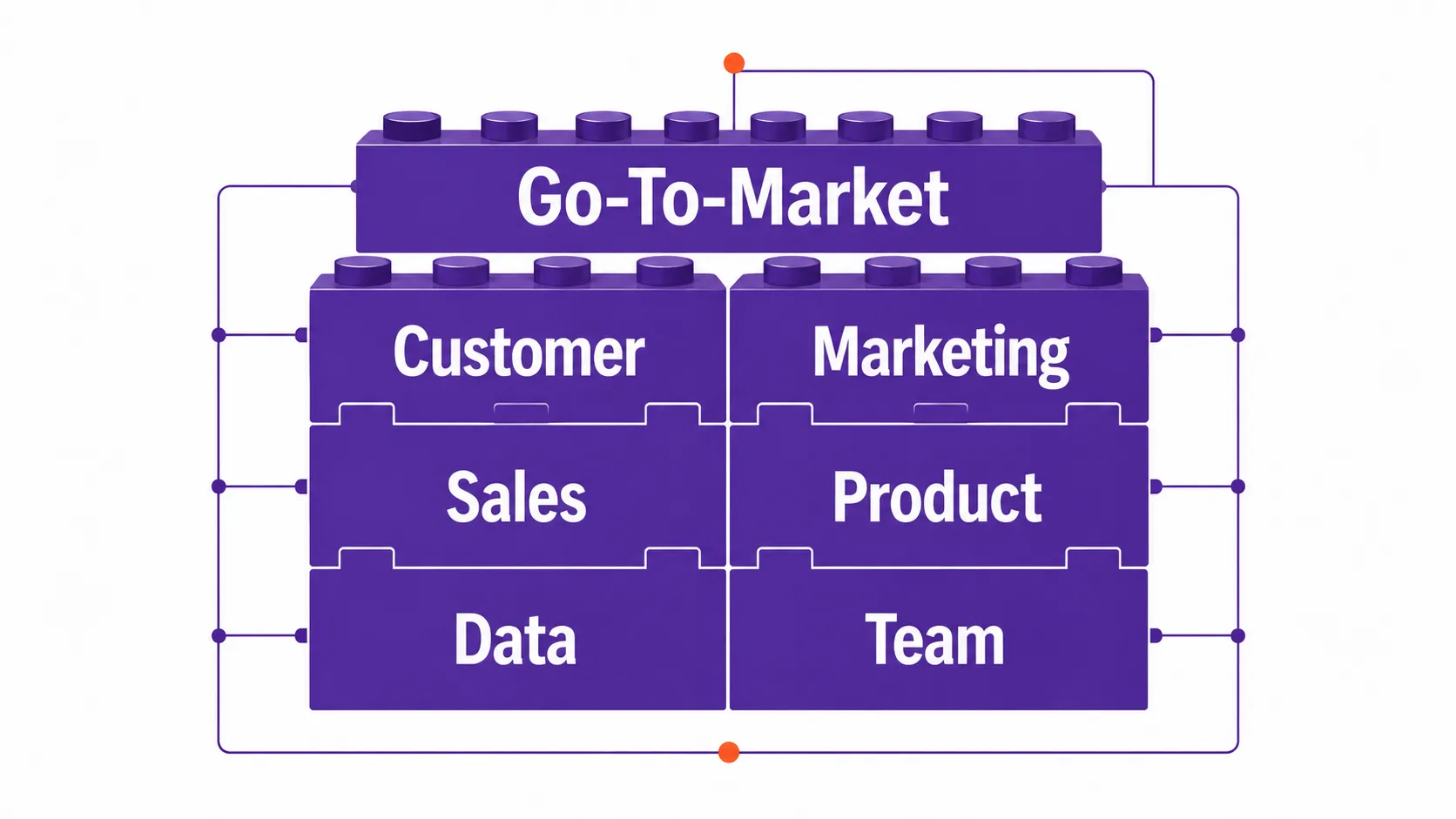
The brands that grow past the first spike don't have better products or bigger budgets; they have an underlying architecture built into the GTM from the start.
Their strategy was designed as an operating system rather than assembled as a launch plan with nurture campaigns bolted on afterwards as an afterthought.
A GTM operating system answers the question the launch checklist never does: what happens on day 31, and who specifically is responsible for it?
Most teams do not have a clear answer to that question, and when they don't, three things break simultaneously:
When none of these are defined before launch, the spike fades, the panic sets in, and the team resets - not because the market rejected the product, but because the operating system was never built to run past the launch window.
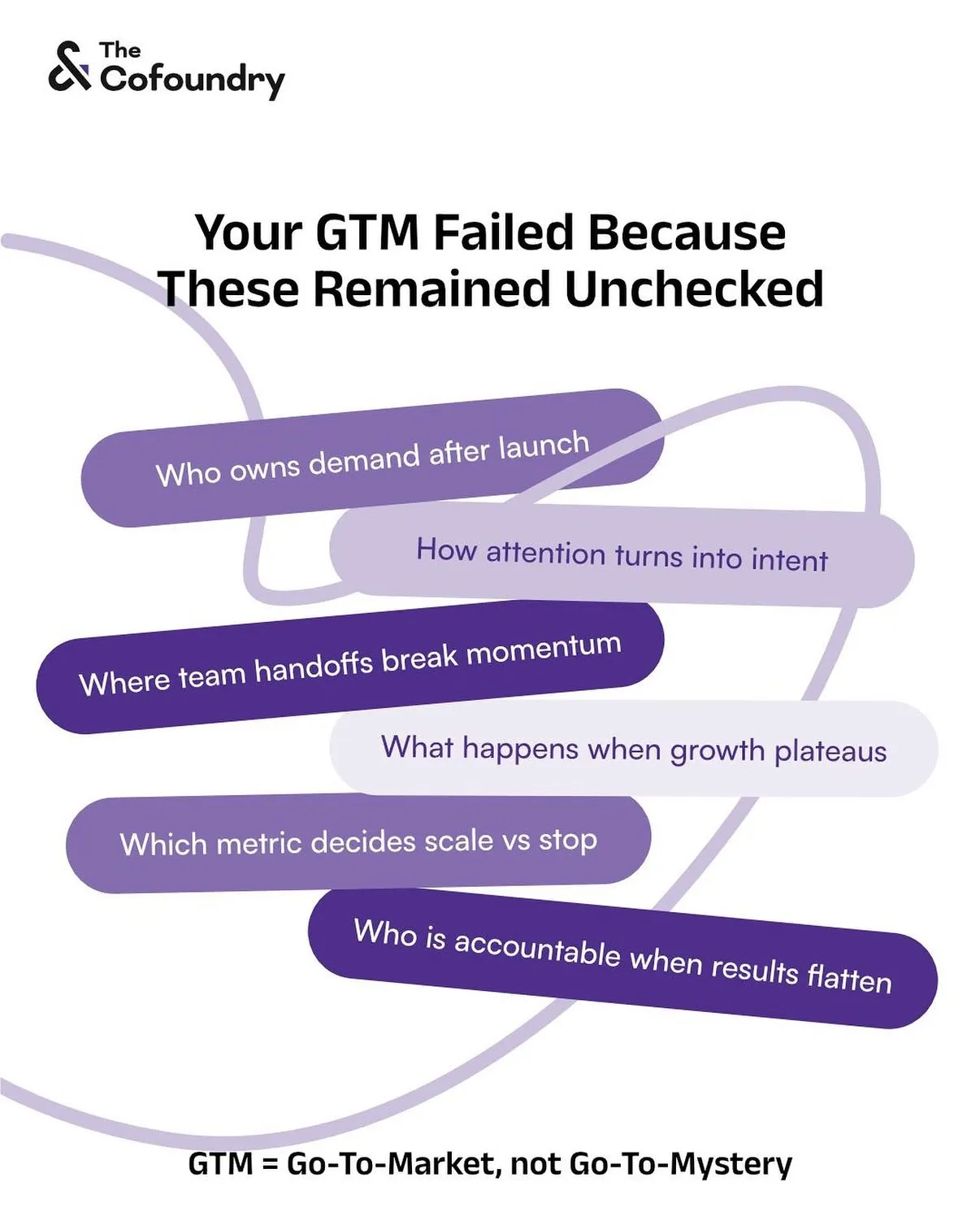
A GTM strategy for brands fails when it answers only the launch questions and ignores the post-launch architecture entirely. Most teams write detailed plans for generating attention, but almost none write plans for what happens when that attention actually arrives and needs to be converted into something durable.
We put six of these diagnostic questions together on LinkedIn, and they apply directly to every brand building a GTM right now:
If your GTM has answers to all six of these, you have architecture. If it has some, you have gaps. If it has none, you have a calendar.
GTM equals go-to-market. Not go-to-mystery.
The most common mistake brands make while building a GTM is selecting channels before the consumer on those channels has been fully understood. Your first 100 customers are not a revenue target; they are signals if your hypothesis is right. And that signal is worth far more than any consumer trends report.
We broke this thinking down in a recent carousel: before a single rupee goes into paid distribution, the real work is understanding who your customer actually is, not as a demographic segment but as a decision-maker, including where they spend time, why they buy, who they trust, and what would make them switch.
boAt understood this from the beginning. When Aman Gupta and Sameer Mehta launched in 2014, they didn't open with a brand campaign; they launched with a clear product truth, premium-looking earphones at ₹499 while JBL was selling at ₹1,200 or more.
They launched exclusively on Amazon and Flipkart, controlled the distribution tightly, and watched how real customers responded before building anything for broader markets or channels. The architecture was validated through the first 100 customers before the campaign was ever scaled.
Most brands reverse this sequence entirely. The campaign generates attention but the GTM has no mechanism for converting that attention into a second purchase or a retained customer. So the attention simply fades and the team is left wondering what happened.
Controlled distribution first. Validated assumptions second. Scaled channels third.
Attention is the top of the funnel, but intent is what actually converts into revenue, and most GTM strategies for brands are genuinely excellent at generating the first while being almost entirely silent on how to produce the second in any reliable way.
A customer sees the brand, considers it, searches for it, visits the site, almost completes a purchase, and then leaves - and that specific sequence is both entirely predictable and largely preventable if the GTM architecture has mapped the customer journey before the launch campaign ran.
Mamaearth built their GTM around a single clear claim: products that are MadeSafe-certified and have ingredients for baby care, in a category where Indian brands were simply not making that claim.
The claim didn't require a large media budget for conversion because it answered the customer's actual concern at the precise moment of consideration rather than just at the awareness stage.
The conversion architecture was tight because the product truth was sharp, and the two reinforced each other in a way that made the path from attention to intent unusually short.
The lesson is not that you need to reduce everything to a single message, but that the journey from attention to intent requires as much deliberate design as the launch campaign itself. Including where the brand shows up during consideration, what information is available at the moment of decision, and what specifically removes the final hesitation before a purchase is completed.
If your GTM strategy ends at impressions, you have designed the spike but not the system beyond it.
Most GTMs have a clearly identified launch lead, but very few are designated to generate and sustain demand. The gap between those two roles is precisely where most post-launch momentum disappears without anyone noticing until it's already gone.
The work around launch is usually clear by design. Campaign ships, assets go live, reporting comes in and the team moves on. What happens after is often left without clear ownership.
However, the initial spike in demand does not disappear immediately. It fades quietly when no one is responsible to carry the attention forward to turn initial interest into repeated consideration.
By the time the plateau sets in, the teams are often planning the next push instead of fixing what broke in between.
Licious didn't build India's premium fresh meat brand through repeated launch cycles. They built a subscription model that turned a sporadic purchase into a predictable weekly habit, and that model is an accountability architecture with genuine teeth.
Someone owns the renewal rate, someone owns the churn number, and someone is accountable for the specific metric that tells the whole team whether the GTM is still working as intended.
The hardest question most GTMs never answer before launch is this one: which single metric proves this is working?
Not a dashboard full of acceptable metrics, but one number that matters. With a clear target, clear ownership, and a clear decision framework attached to it.
When the number improves, the team scales with confidence. When it drops, they diagnose what needs adjustment instead of resetting the cycle and starting again.
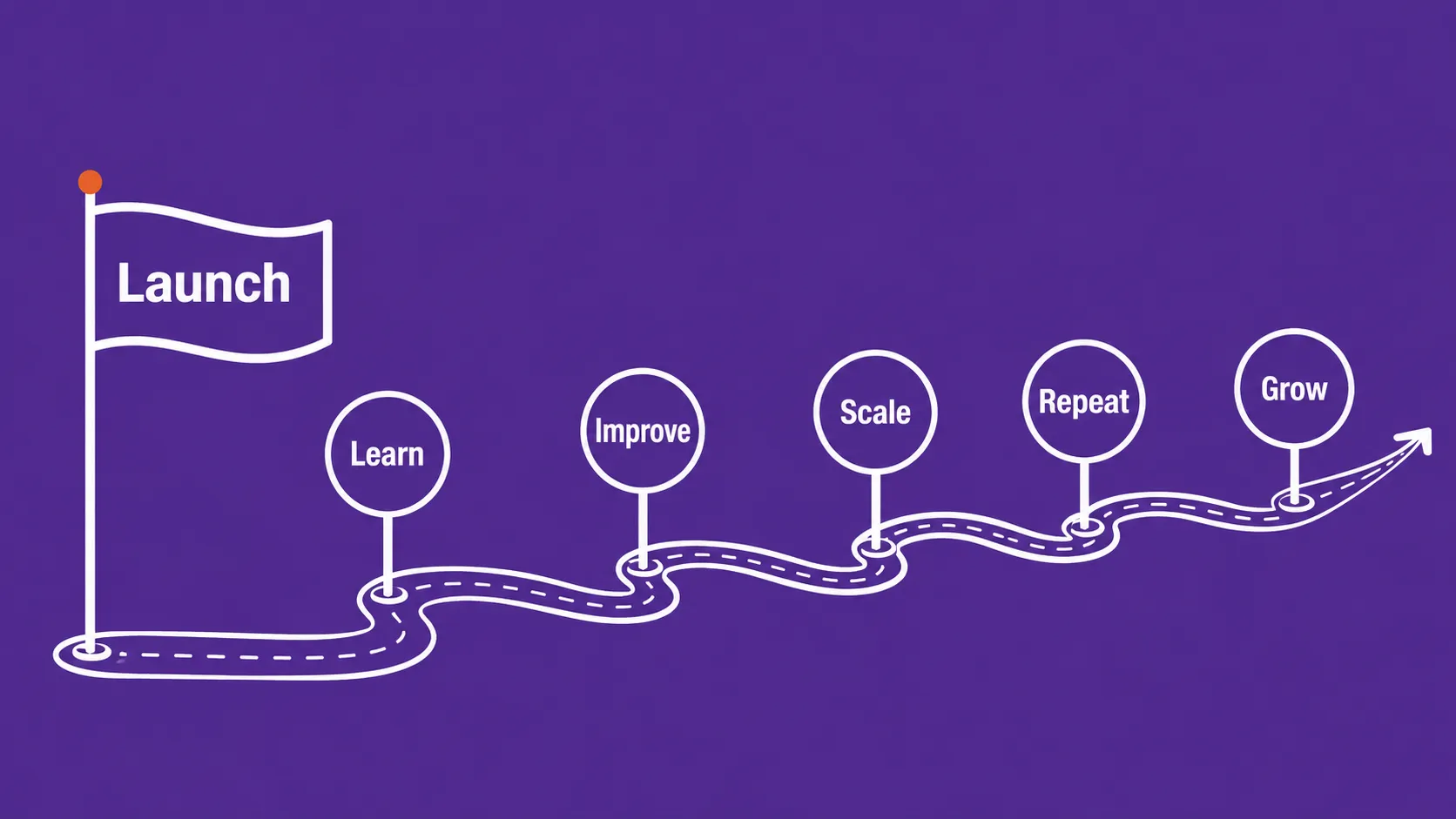
"Go-to-market" sounds like a journey that ends somewhere: plan the route, execute the launch, hit the market, and the work is done.
But consistent demand rarely works that way.
De Beers showed the world something fundamentally different when they relaunched in the 1930s. The diamond did not change. What changed was the GTM system around it.
Supply was high and the demand was weak. But what De Beers constructed in response was not a campaign but a cultural operating system.
The association of diamonds was seeded through Hollywood partnerships. The idea was reinforced in films, in media, and turned into retail through behaviour.
Over time, buying a diamond stopped feeling like a choice and started feeling like the default.
"A Diamond is Forever" was not just a tagline. It was a long-term decision backed by repetition, distribution, and consistency long after the original campaign ended.
Diamonds did not get rarer. The GTM operating system creating demand got stronger.
The brands building lasting market positions are not running better campaigns; they are running better systems.
The campaign is one component, but the operating system is everything surrounding it: the demand generation rhythm, the conversion architecture, the accountability structure, the partner ecosystem, and the metric that clearly tells you whether it is all working together or quietly falling apart.
The real shift is not from bad GTM to good GTM. It is from GTM as a one-time event to GTM as permanent infrastructure.
Before the media plan is written, the influencer list is built, or before the campaign brief is sent, answer these five questions with actual specifics. If they cannot be answered concretely, the GTM is not ready to run.
These questions are not new, and every experienced brand builder has asked some version of them at some point in their career. The difference between brands that cycle endlessly through spikes and brands that compound quietly over time is simply whether the answers existed before launch, or were only worked out afterwards.
There is a quiet pattern visible across every market we work in at The Cofoundry.
The brands growing steadily, rather than just spiking, are not working harder than their competitors; they have a cleaner operating architecture underpinning their entire go-to-market approach.
The right agency partners are integrated into the GTM from the very beginning, co-owning outcomes rather than executing briefs and moving on when the campaign ends.
The handoffs are deliberately designed rather than left to chance. The accountability is clear before launch rather than assigned after the results disappoint.
The ecosystem of brand, strategy, and execution partners is operating from the same system. Committed to the same metric, with genuine skin in the game across all sides of the partnership.
That is what a GTM operating system looks like when it is actually running: not a framework presented on a slide, but an integrated structure where brands and the partners executing alongside them are pulling in the same direction toward the same outcome.
The brands without this structure will keep running the same cycle.
Launch. Spike. Panic. Reset.
The difference between motion and momentum is architecture, and that is exactly what The Cofoundry was built to help brands and their partners design together.
A GTM strategy for brands is the structured plan for how brands enter or expand in a market. It covers customer design, positioning, distribution channels, and conversion journey. The plan includes post-launch demand ownership that goes beyond the launch campaign and includes the operating framework for demand sustenance and compounded growth over time.
Most GTM strategies are designed around the launch window rather than around what comes after it. They define how to generate attention but not how to convert it. When the launch team moves on and nobody owns demand, momentum fades predictably. Research from Startup Genome shows that 80% of startup failures trace back to GTM execution problems rather than product problems.
A go-to-market operating system is a continuous, structured framework for generating and sustaining demand across time. Rather than treating GTM as a one-time event, it treats demand as something that needs to be sustained over time: clear ownership, conversion systems, accountability, metrics, and the structures that keep momentum from fading. The core difference between a launch plan and a GTM operating system is the difference between designing a campaign and designing an infrastructure that keeps working after the campaign has ended.
Define one primary metric before launch that demonstrates demand is compounding rather than just spiking after the launch window closes. This could be repeat purchase rate, subscription retention, organic search growth, or category search share depending on the specific business model. What matters most is that the metric should have clear ownership within teams, a defined target, and a decision-making process attached to it.
At minimum, the GTM needs to answer: who owns demand continuously after launch, how attention turns into intent at each stage of the funnel, where the team handoffs occur and who owns each one, which single metric decides when to scale versus when to stop, and what success looks like specifically at month 1, month 6, and month 12. If these questions have no concrete answers before the campaign launches, the GTM will very likely stall at the first growth plateau it encounters and the team will be left without a clear way to respond.


.svg)

.svg)
.svg)


