.svg)




A team that looks checked out is usually a team that was never told what it owns. Gen Z work ethic is the easiest explanation available and almost always the wrong one. What gets read as indifference is what happens when someone is handed a task, given no authority to finish it, and then judged on how it turned out.
The complaint has a familiar shape by now: they need constant hand-holding, they ask too many questions before starting, and they do exactly what was asked and nothing beyond it. Every one of those observations is usually accurate. The diagnosis attached to them is not.
Watch what actually happened before the behaviour showed up. A brief went out with three people copied on it and nobody named as the person who signs it off, and feedback then arrived from two directions and contradicted itself.
The person doing the work made a call, got overruled, and made a smaller call the next time. By the fourth round they had stopped making calls at all, which is the rational response to being held responsible for decisions you were never given.
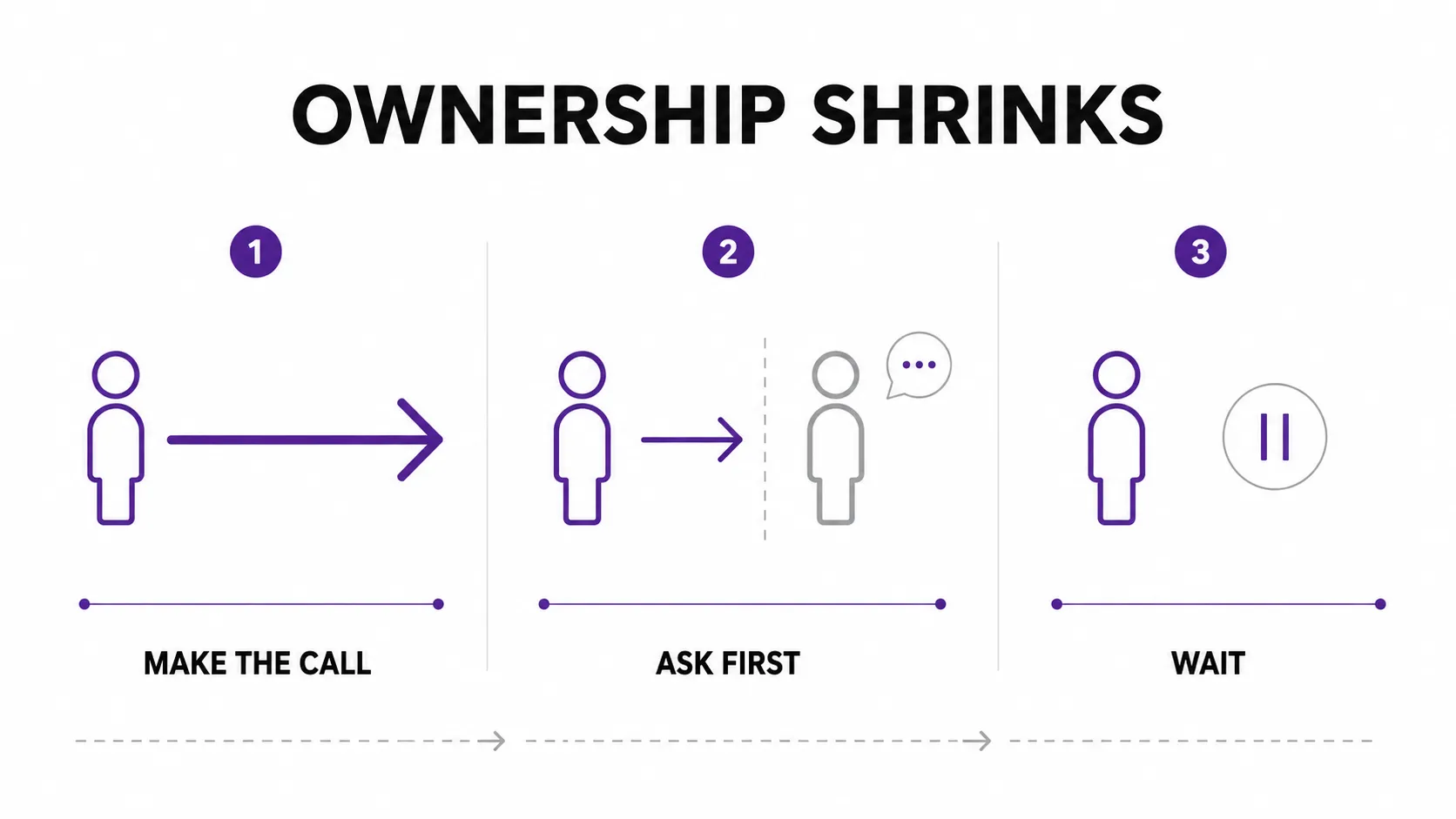
None of that sequence shows up anywhere as a structural failure. It shows up as a line about attitude in a review, written by someone who was not in the room when the brief was set. The Gen Z work ethic verdict arrives already formed, and the thing that produced it goes unexamined.
That is not a generation refusing to work. That is a person learning, correctly, that initiative is expensive here.
Nothing dramatic happens. That is the part most founders miss when they go looking for the moment things went wrong.
A campaign ships, the launch assets go out on time, and the numbers look fine for a week. Then the follow-up posts slip, because the person who made them was never told they owned what happened after launch, only that they owned the assets. A client email sits in drafts for two days because nobody is sure whose tone it should carry.
A deck goes through four reviewers and no approver, so it improves in every round and never actually leaves the building. By the time anyone notices, the account has quietly drifted from where it was supposed to be, and there is no single decision you can point to and call the mistake.
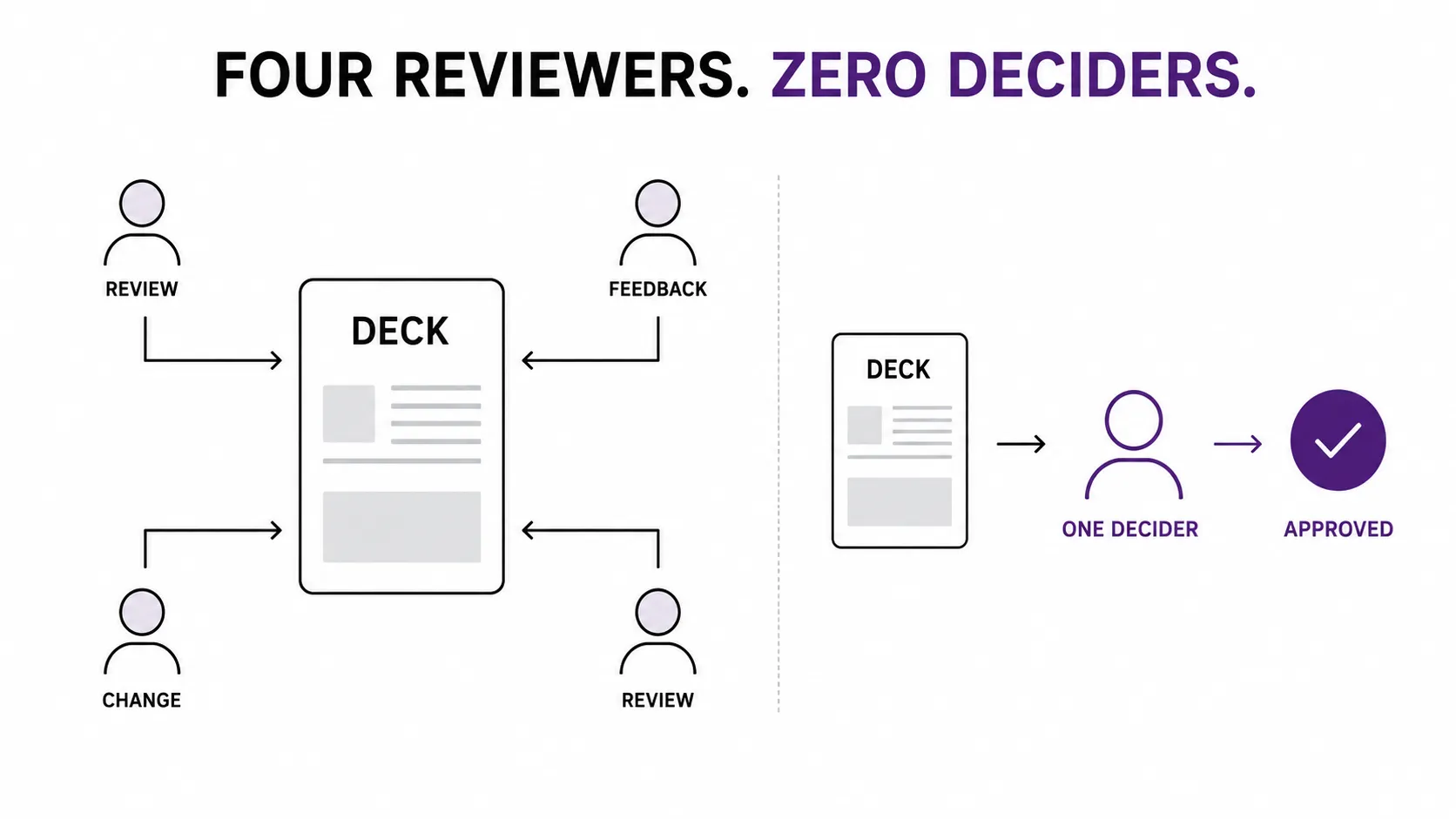
This is where the generational read falls apart under scrutiny. "They do not care enough" is a claim nobody measures, while unclear ownership shows up in a specific survey item that has been tracked for years and has a visible trend line.
Gallup found that just 46% of employees clearly know what is expected of them at work, down ten points from a high of 56% in March 2020. Among the twelve engagement elements Gallup tracks, clarity of expectations was the single steepest decline, and the drop was sharpest among workers under 35, where Gen Z fell five points in a year on that exact measure. The version of this problem you can actually watch, move, and re-check next quarter has been getting worse for five years. It is not the version anyone is complaining about.
The cost of that is not abstract in this market either. India's employee engagement hit a four-year low in 2025, which Gallup puts at roughly $351 billion in lost productivity, close to 9% of the country's GDP.
That figure is not a Gen Z line item. It is what an entire workforce costs when the question of who owns what stops getting answered out loud. The youngest people in the building simply register it first, because they have the least accumulated context to fill the gap in on their own.
The Gen Z work ethic conversation usually starts with two people describing the same employee and reaching opposite conclusions. The agency sees someone who waits to be told and calls it low initiative. The brand sees someone who asks what the outcome is before starting and calls it entitlement. Both are describing a person trying to find out what they are accountable for.
We posted about this on LinkedIn a few months ago, and the response made the pattern clearer than we expected. Founders on both sides recognised the behaviour instantly. Almost nobody recognised their own role in producing it.
The reason the misreading persists is that each side is protecting something reasonable. Brands want control, because they are answerable for the outcome and the budget. Agencies want trust, because they cannot do good work while being second-guessed on every call.
Both positions are defensible on their own, and put in the same room they produce a silence exactly where accountability should be, because naming who decides feels like one side conceding to the other. So the conversation gets deferred until the work has already started, and the person closest to it absorbs the ambiguity and then gets labelled for it.
Neither, exactly. What they want is to know what the work is for. More direction produces a task list, which is what most teams already hand out and what most young employees find hollow, and ownership without a stated outcome is only risk transferred downward. What holds them is the pairing, a clear outcome and the authority to pursue it.
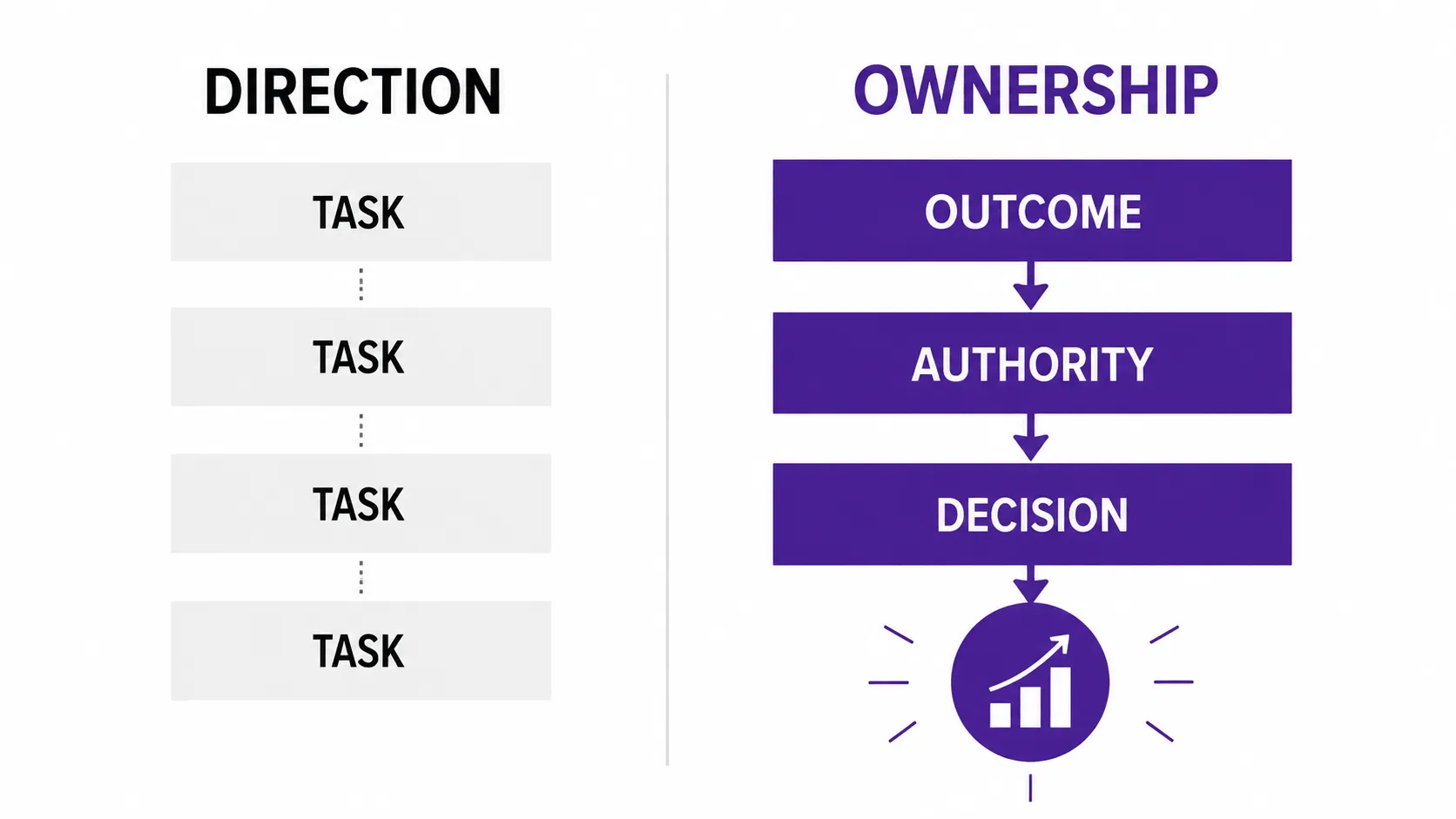
The data on this is more pointed than the stereotype allows. Deloitte's 2026 Gen Z and Millennial Survey found that 99% of Indian Gen Zs say a sense of purpose is important to their job satisfaction. The same survey found 96% are interested in senior leadership roles, and only 9% name it as their primary goal.
Read those two numbers together and the entitlement story collapses. This is not a cohort that refuses responsibility, it is a cohort that refuses responsibility with no visible point to it. They will take the harder brief if someone tells them what it is supposed to change, and they will not take it simply because it is next on the list.
Activity on its own does not energise them, a named outcome does, and that is a design choice rather than a personality trait.
Most teams treat accountability as something that emerges once people have worked together long enough and trust has built up. It does not emerge on its own, it either gets designed early or gets improvised badly under deadline pressure.
This is not a new finding, and it did not start with Gen Z. Paul Rogers and Marcia Blenko made the case in Harvard Business Review two decades ago, arguing that organisations stall on ambiguity about who decides, not on the quality of the people deciding.
Their answer was to make decision roles explicit before the work begins, rather than letting them settle informally once the work is underway:
The generation entering the workforce now did not invent that principle. It simply has far less patience for organisations that skip it.
Netflix built the same idea into how the company runs. Its culture memo assigns every significant decision to one named informed captain, the person closest to the problem, who is expected to actively gather dissent before making the call.
The dissent gets farmed first and the decision gets made second, and once it is made, everyone who argued the other way is expected to help it succeed. What that structure removes is not disagreement but the question of whose call it was, which is the question that quietly eats weeks.
Neither Netflix nor the organisations Rogers and Blenko studied waited for accountability to arrive on its own. They wrote it down.
Brands treat ownership as something to retain. Agencies treat it as something to be granted. Young teams treat it as the thing that tells them whether their work matters.
Ownership is designed in the first meeting, not recovered in the fourth. The work takes under an hour on most accounts, and it is the difference between a team that moves and a team that waits for permission. Fixing a Gen Z work ethic problem usually means fixing this instead. Five things get settled before anyone opens a file.
What makes this hard is not the mechanics, it is that every item on the list forces a conversation someone would rather postpone. Naming a single decider means telling two other people the call is not theirs. Stating an outcome means committing to a number in front of a client. Agreeing an escalation route means admitting in advance that something will go wrong.
Each of those conversations is cheap in week one and expensive in week six. None of them requires a new tool or a longer onboarding deck. They require the uncomfortable ten minutes at the start where someone says the quiet part, which is who decides when we disagree.
Most breakdowns between brands and agencies do not come from bad intent on either side. They come from accountability that nobody defined while it was still cheap to define. The Gen Z work ethic explanation is the comfortable one, because it makes the problem about individual behaviour, and the structural explanation is harder, because it puts the problem in the room where the brief was written.
The Cofoundry sits in that room with brand leaders and agency founders, designing ownership before execution begins, so the decisions that usually surface as friction six weeks in are settled in week one instead. Clarity is not a soft thing that builds up over time, it is the first piece of architecture, and everything else gets stacked on top of it.
This is not disruption. It is design.
There is no credible evidence that it is. What the data does show is a sharp decline in role clarity across the whole workforce, and the steepest fall among workers under 35. Gallup's tracking found that under half of employees clearly know what is expected of them, down significantly from 2020. Younger employees feel that gap most because they have the least accumulated context to fill it in on their own.
It looks ordinary, which is why it goes unnoticed. Decks that improve through four rounds of review and never ship because no one is the approver. Campaigns where the launch has an owner but the six weeks after it do not. Feedback arriving from two people who contradict each other with no one to break the tie. None of these register as a crisis, and together they are what drift is made of.
Give them the outcome and the authority, then agree the review moments in advance. Micromanagement is usually what happens when a leader hands over the task but keeps the decision, so they have to keep intervening to protect a result they never actually delegated. Ownership means the person can make the call and be wrong occasionally, with a scheduled point where input arrives rather than a manager appearing unannounced.
Because each side is protecting a different thing. Brands are answerable for budget and outcome, so they hold on to control and read questions as pushback. Agencies need room to work without being second-guessed, so they ask for trust and read instruction as interference. Both instincts are reasonable, and neither leads to anyone naming who decides, which is what the person doing the work actually needs.


.svg)

.svg)
.svg)


