Every founder eventually learns these five things. The question is whether they learn them before the mistake or after.
Business lessons founders learn too late rarely arrive as a single dramatic failure. They arrive as a slow accumulation, the client who left and took forty percent of revenue with them, the senior hire who quit because the culture never matched the pitch deck, the shift the founder saw coming and hesitated on anyway. Each one looks, in the moment, like a specific and unrelated problem. In hindsight, they are the same five blind spots, worn by different founders in different years.
Akshay Gurnani has lived through all five. In 2010, he left a finance job to bet on digital marketing, when most of India had not decided Facebook and Twitter mattered for business. He built an agency that scaled past 200 crores and past 2,000 people. Each milestone taught one of these lessons the expensive way, in real time, with real consequences. The pattern is what we want to hand founders before their own business has to teach it to them.
By the time a shift is obvious, the advantage of moving early is already gone. Betting on shifts before they're obvious means acting on a pattern you can see forming, not a trend everyone else has already confirmed.
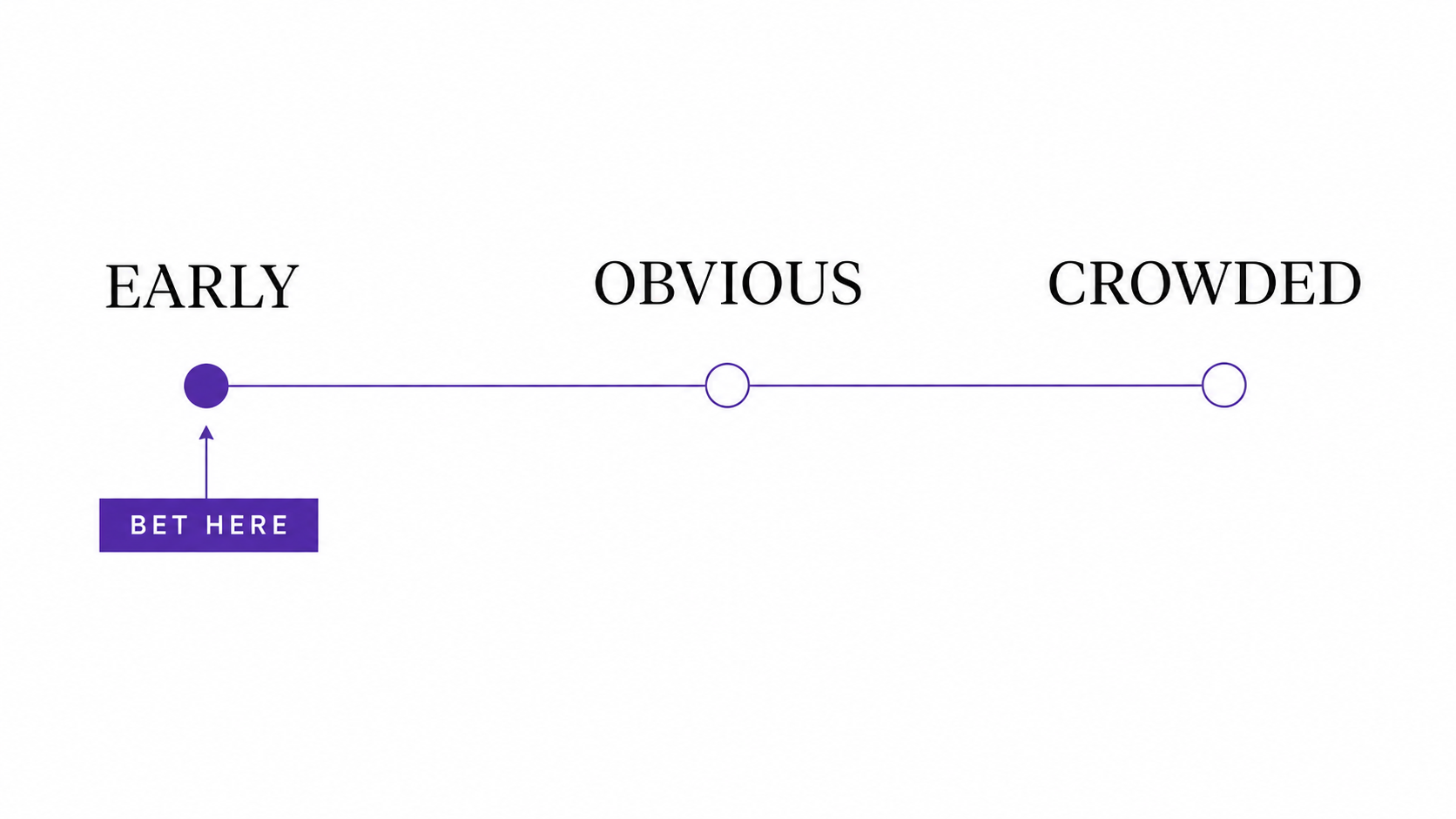
In 2010, digital marketing was not a career path most people in India took seriously. Social platforms were treated as a novelty, not infrastructure. Akshay left a stable finance job to build in that space anyway, years before the market caught up to what he had already bet on. That single decision shaped the next fifteen years of his career.
The uncomfortable part of this lesson is that it never feels safe when it matters. If a shift already looks safe, the upside has already been priced in by everyone who moved before you. Founders who wait for certainty are not being careful. They are choosing to arrive after the opportunity has already been split among people who moved without it.
Landing a first big brand feels like arrival. It is not. It is exposure.
Most founders treat their first major client as proof that the business has made it. What that client actually represents is concentration risk. If forty or fifty percent of revenue sits with one account, the agency does not control its own future. That client's budget cuts, leadership change, or shift in strategy controls it instead.
One client won't save you, no matter how prestigious the logo looks on the deck. Stability comes from diversification and consistent delivery, not from one relationship, however strong it currently feels. The founders who learn this early build client acquisition into the business model from day one, instead of treating it as an afterthought once the first big account inevitably wobbles.
Scaling a team past 2,000 people teaches a lesson most founders resist at fifteen people: fancy offices and perks do not hold teams together. Culture is everything, but culture is not what shows up in the recruitment deck.
Transparency, purpose, and feeling genuinely valued are what keep people through the hard quarters. A team that believes its founder is straight with them, that understands why decisions are made, and that feels its work connects to something larger, stays through pressure that would break a team held together only by ping pong tables and free lunches.
This connects to a pattern we see constantly in the agencies we work with: the founders losing their best people every six to eight months usually have a perks-and-title culture, not a trust culture. And the founders wrestling with unclear ownership are often the same ones who built culture on optics instead of on the conditions that make people actually feel invested.
The founders who stay relevant across a fifteen-year career are rarely the ones who mastered one skill and defended it. They are the ones who never stopped being curious.
Curiosity compounds. The same instinct that pushed Akshay from finance into social media marketing in 2010 is the instinct that keeps him relevant now, moving from social platforms to AI-driven marketing without losing his footing. Curiosity is not a personality trait reserved for people who like trying new things. It is the mechanism that lets a founder's judgment stay current while everything around them changes.
Founders who stop being curious are not making a neutral choice. They are choosing to let their expertise quietly expire while telling themselves it is still current.
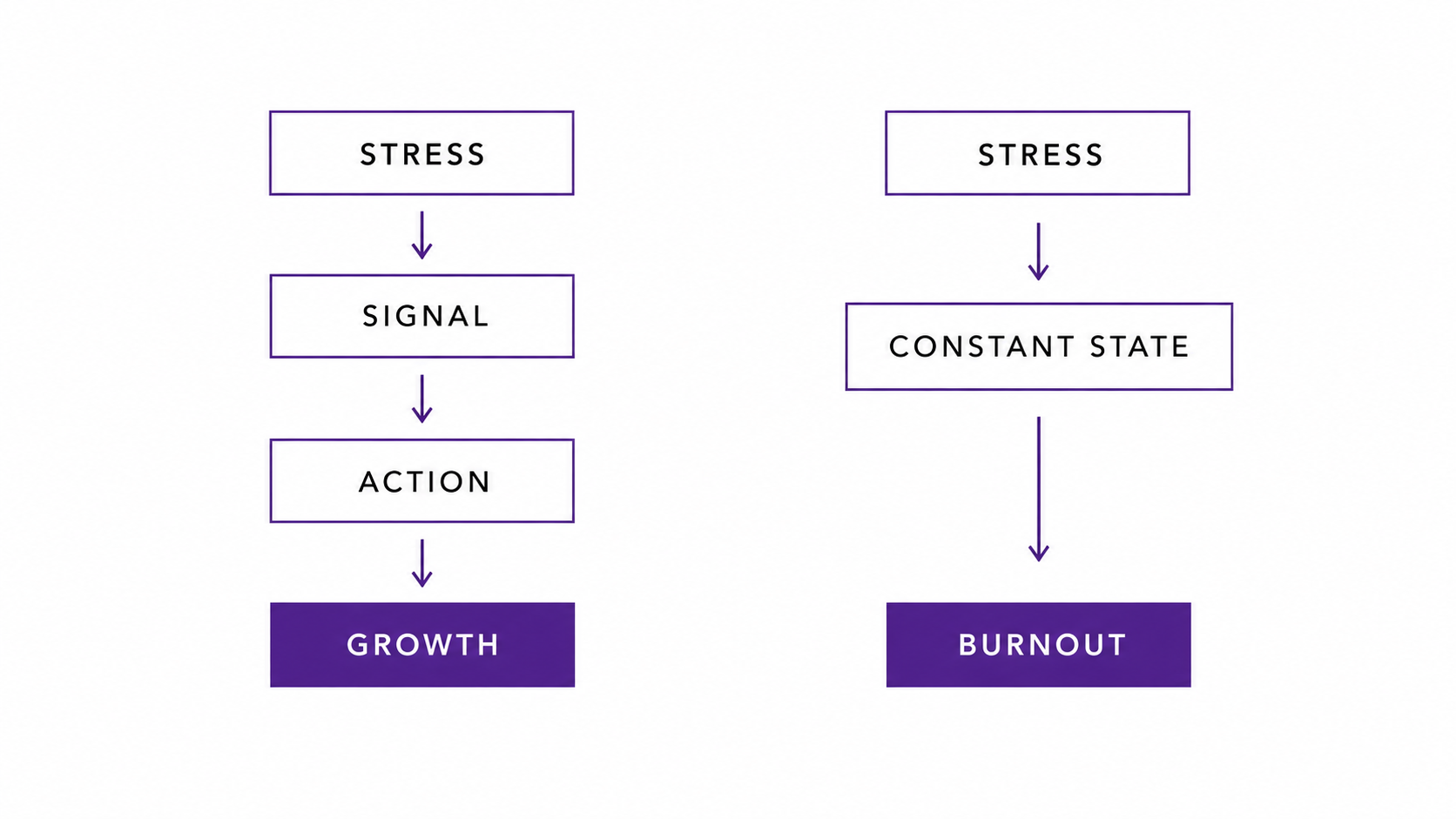
Founders are told constantly to eliminate stress, protect their calendar, avoid burnout at all costs. The advice is not wrong, but it misses something. Stress can either break you or push you to new levels, and the difference is not the presence of stress. It is what the founder does with it.
When Akshay's team rented a 10,000 square foot office with only twenty people in it, the decision felt reckless. The space was far bigger than the team needed. That discomfort, the daily reminder of how much room there was left to grow into, forced the team to grow faster than a comfortable, right-sized office ever would have.
Stress used as a signal, this space is too big, this client roster is too thin, this team is not ready for what is coming, pushes a founder to close the gap. Stress used as a constant state, always firefighting, never catching up, breaks people instead. The lesson is not to avoid stress. It is to notice which kind you are carrying.
Look at the five again. Betting early is a judgment problem. Client concentration is a risk problem. Culture is a trust problem. Curiosity is a relevance problem. Stress is a perception problem.
Different surfaces, same underlying skill: reading a pattern before it fully declares itself, whether that pattern is a market shift, a fragile client base, a culture built on the wrong foundation, an expiring skill set, or a stress signal worth listening to.
This is the muscle The Cofoundry exists to build alongside founders, not years after the lesson has already cost them something, but while there is still time to act on it. We have sat inside enough of these moments, as operators first, to recognise the pattern before it fully plays out.
Not as consultants pointing at the mistake after it happens. As partners in the room while the bet is still being made.
Because each lesson tends to arrive disguised as a unique, urgent problem, a client leaving, a hire quitting, a missed market shift, rather than as a recognisable pattern. Founders who have not seen the pattern before treat each instance as a one-off rather than as one of a handful of recurring blind spots.
If a single account makes up close to half your revenue, that client controls meaningful parts of your business's future, not you. The fix is not turning away a good client. It is building new business development into the model from the start rather than only after the concentration becomes a crisis.
Transparency, purpose, and people feeling genuinely valued, not perks or office design. Teams stay through hard periods because they trust the founder and understand where the company is headed, not because of the amenities listed in the recruitment deck.
Because expertise expires as markets shift, and curiosity is the mechanism that lets a founder's judgment update as the landscape changes. The founders who stayed relevant across a decade or more were rarely the most specialised. They were the ones who kept learning past the point where it felt necessary.
Not entirely. Stress used as a signal that a team, a client base, or a company is under-built for what is coming can push growth that comfort never would have. Stress becomes damaging when it turns into a constant, unmanaged state rather than a specific signal a founder can act on.